


Image credit: Jonny Lighthands & Eleonore Guerra / Turing Commons / CC by 4.0
Anthropic and OpenAI are, by some estimates, the fastest growing companies in history. Their revenues are sky-rocketing, adoption of their products is on the rise, and people are becoming increasingly willing to pay for their technology. There is clearly a great deal of value to be captured in this industry, and right now the frontier labs are capturing a lot of it.
What we don’t know yet is whether the current market structure lasts. Broadly, this could play out in two ways:
Competition holds and AI becomes a commodity. Under this scenario, “winning” the AI race becomes less important because the gap between the “frontier” and the rest remains small, and cheap, near-frontier capability is sufficient for most tasks. Model providers cannot extract rents because of fierce competition from rivals, and model capabilities are spread across countries. Consumers and businesses retain options, the productivity dividend flows down, and smaller countries benefit economically without sacrificing sovereignty
Consolidation occurs and advanced AI capabilities become concentrated in an oligopoly or monopoly. Under this scenario, the models and applications developed by a handful of companies gain an insurmountable lead over the rest of the market. This market power allows these dominant firms to extract most of the value, while consumers and businesses see limited returns from their AI use; most governments are left with few levers to shape AI; and the countries hosting these companies hold geopolitical leverage over the rest of the world.
Anthropic CEO Dario Amodei has predicted a stable oligopoly, while Sam Altman talks about the value flowing down through “intelligence too cheap to meter”.
So, based on current evidence, which way are we heading?
Enjoy AI’s competitive phase while it lasts
As things stand, AI really does look competitive on several fronts.
Three labs are genuinely still competing at the frontier, and none is fully able to hold its lead. Token prices are falling fast and there aren’t yet signs of rent seeking behaviour. Open weight models remain a few months behind (see below), and users are turning to cheaper models as they realise not every task requires the performance of frontier behemoths like Fable.
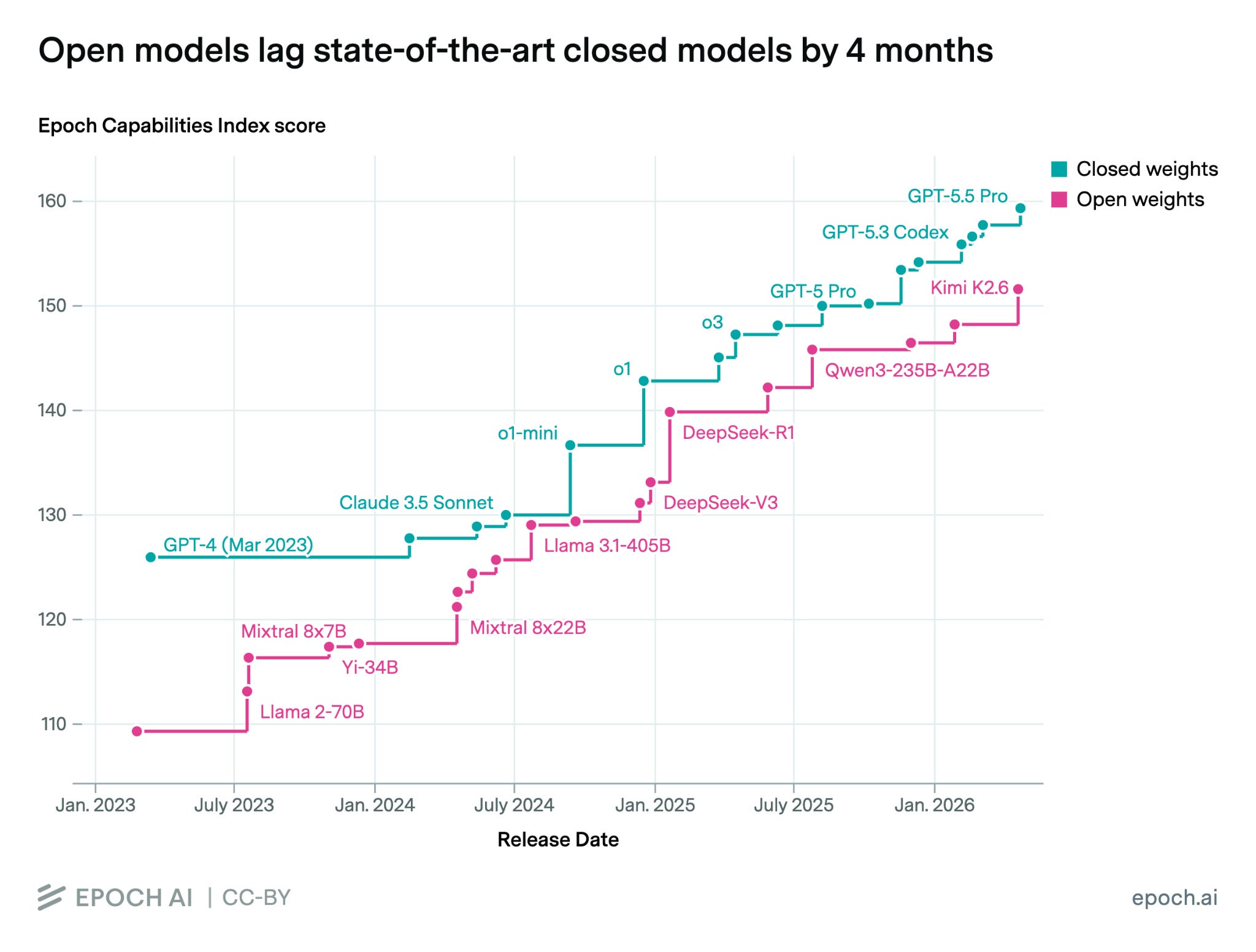
Figure 1 - EpochAI showing how close behind open weight models are on their capability index.
It also seems that many of the forces that produced Big Tech dominance do not straightforwardly apply to AI, or at least not to the model layer. Network effects don’t kick in when there’s no real benefit to using the same AI model as everyone else, and when models aren’t an important intermediary between consumers and businesses. And switching costs remain minimal - migration from one model to another remains pretty frictionless and you can (for the moment) port over your memory when you move, thanks to the current design choices of the AI labs.
Even where it seems like traditional market forces would steer AI towards oligopoly, this hasn’t fully played out yet. The economies of scale of frontier AI are real, and only getting bigger, although there are questions about how expensive training runs will be funded if frontier labs fail to secure market power. So far, though, scale alone has not stopped open weight models from keeping up.
Whether the model market becomes a stable oligopoly or remains competitive has yet to be decided.
The competitive phase is temporary
The absence of consolidation so far is not evidence it will never come. New technologies are often characterised by a long competitive phase, in which multiple players compete and barriers to entry are low, before power consolidates through some combination of market dynamics, anti-competitive practice, and regulatory passivity.
And even if competition does hold at the model layer, that won’t be enough. Cheap, plentiful models and a competitive AI economy are not the same thing because models are only one layer of a much wider stack. Commodification in one place has a habit of pushing market power and rent seeking behaviour into another place, rather than getting rid of it entirely.
A good example is connectivity infrastructure, which during the Dot-com bubble many thought would be a source of enduring market power, leading to soaring valuations for telecoms and internet service providers. Instead, the bubble burst, the value of those companies and the infrastructure they built collapsed, and a new generation of tech platforms took advantage of cheap and ubiquitous connectivity to build enduring monopolies.
AI has at least two routes to the same outcome. The obvious one runs down the stack, to chips and data centres, where extreme capital intensity makes it hard for all but a few behemoths to compete. This is already a big problem which deserves serious consideration, but it is hard for governments to address because it stems mostly from the sheer costs of building.
The less obvious route runs up the stack, through the applications and agents built on top of the models. That is the layer where AI companies could soon consolidate power and start making big profits, and its also the layer policy can make an immediate difference. This is our focus for the rest of the piece.
The forces that produced Big Tech dominance do still apply - just not to models
So far it has proved difficult for AI companies to lock in a customer base and extract monopoly rents simply by developing the best model. Instead, companies are building interfaces and services on top of their models which offer better prospects of digging an enduring moat. This is the emerging world of AI agents and assistants that take actions on users’ behalf, rather than simply providing information like chatbots.
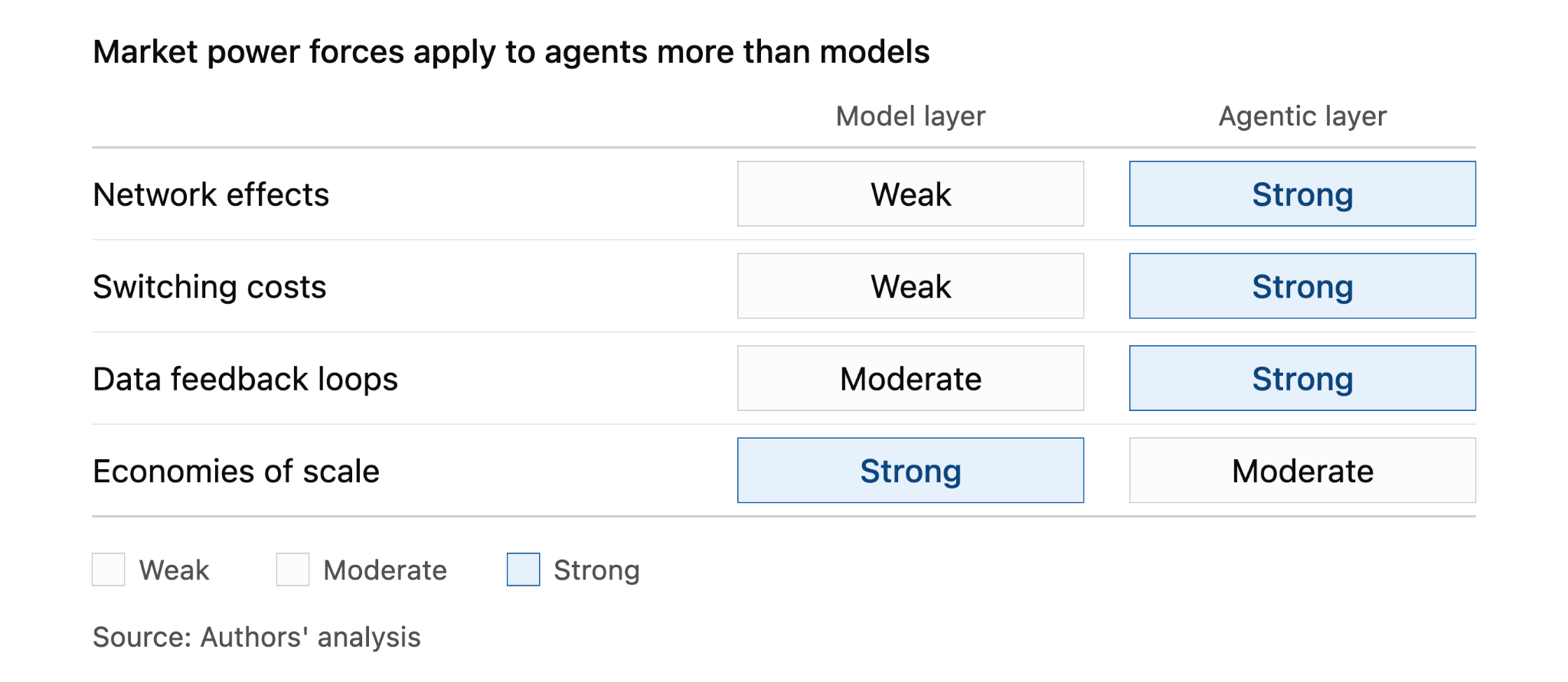
Figure 2 - will market forces pull AI towards oligopoly?
Take network effects. An agent is more valuable to a consumer or enterprise customer if it has integrations and partnerships with major vendors, and more valuable to vendors as it gains users. It is easy to see how this dynamic could fuel concentration in the market, and make it harder for buyers and sellers to move from one agent to another.
Such network effects are already visible in the growing number of content licensing deals between AI providers and publishers, whereby publishers prioritise deals with the most widely-used AI systems, and users are drawn to AI tools that can draw on high-quality, reliable and real-time news.
Data feedback loops could also become far stronger. A chatbot receives a query and answers it, and in some cases engages in more sustained dialogue with a user. An agent not only interacts with users in a sustained way, but by executing a wide variety of personal and professional tasks for them, gathers far more data, including highly valuable data on task success/failure that can then be used to make the agent more useful both for that individual and the userbase as a whole.
Finally, switching costs are also likely to be much higher in the agentic context. Porting a chat history is relatively easy. Porting two years of accumulated context, an agent’s understanding of how your organisation works, and deep integration across multiple services (email, productivity software, e-commerce, databases) is another story entirely.
If models commoditise – and even if they don’t – the way to build enduring market power is by locking users into the AI services and ecosystem you build on top of them. Today’s tech giants, which dominate everything from online search and browsers to office software and operating systems, are ideally placed to do this.
Can we direct AI toward competition?
Oligopoly isn’t inevitable. Markets can develop in all sorts of ways and intelligent policies can steer them in a more inclusive direction
The foundational layers of AI are hard for governments to address because concentration in key inputs compute and chips is primarily driven by economies of scale. This doesn’t mean they shouldn’t try, but it does mean the agentic layer may be a more tractable place to start.
New laws like the EU’s Digital Markets Act and the UK’s Digital Markets, Competition and Consumers Act are well-placed to stop Big Tech firms exploiting their existing market dominance to give an unfair leg up to their AI agents. These laws also allow regulators to impose the interoperability and data portability requirements that are needed to ensure an open and competitive AI market. For example, they could make sure that AI providers keep it easy to switch between agents, taking your memory and prompt library and everything else with you, and as a result making it easier for new competitors to emerge.
Competition authorities also have the power to investigate, and where necessary unwind, anti-competitive mergers and partnerships between firms across the AI stack, including hyperscalers, model developers, chipmakers and others. While regulators appear to have lost interest in scrutinising these transactions, they remain a real concern. SpaceX’s acquisition of Cursor, for example, is just the latest in a long list of deals that threaten to steer AI towards a closed and concentrated future.
Thanks to continued competition in the market - at least for now - governments have a critical window to steer AI towards an open future. As the past few decades have shown us, once markets consolidate, they become harder to prise open. If we want to prevent AI’s economic benefits from being captured by a handful of corporations and countries, we need to act now.